A Stretched S Is Not a Plus-Size Pattern
Plus-size is not a pattern. It is a tag. And in wireless bras and briefs, that tag gets asked to do a lot of engineering work. A stretchy small pulled over a fuller body does not become an extended size. It becomes a tensile test. The fabric gives because it has no choice. That is not fit. That is forgiveness.
When a garment is drafted as an extended size, the block is built from larger measurements: underbust, full bust, high hip, front rise, back width. When a garment is only tagged plus, the base pattern is often a straight size with extra fabric added at one seam or a smaller size made from a high-stretch material. The difference is invisible on the model and very visible after an hour of wear.
Wireless Bras Can't Hide a Bad Grade
An underwire bra has a metal frame to force the garment into place. A wireless bra has no such cover-up. If the band is not drafted wide enough for the torso, the bra migrates north. If the side panel is not deep enough for the fullest part of the back, the bra digs in. The center gore no longer has a wire to anchor it, so it floats, tips forward, or moves with every arm raise.
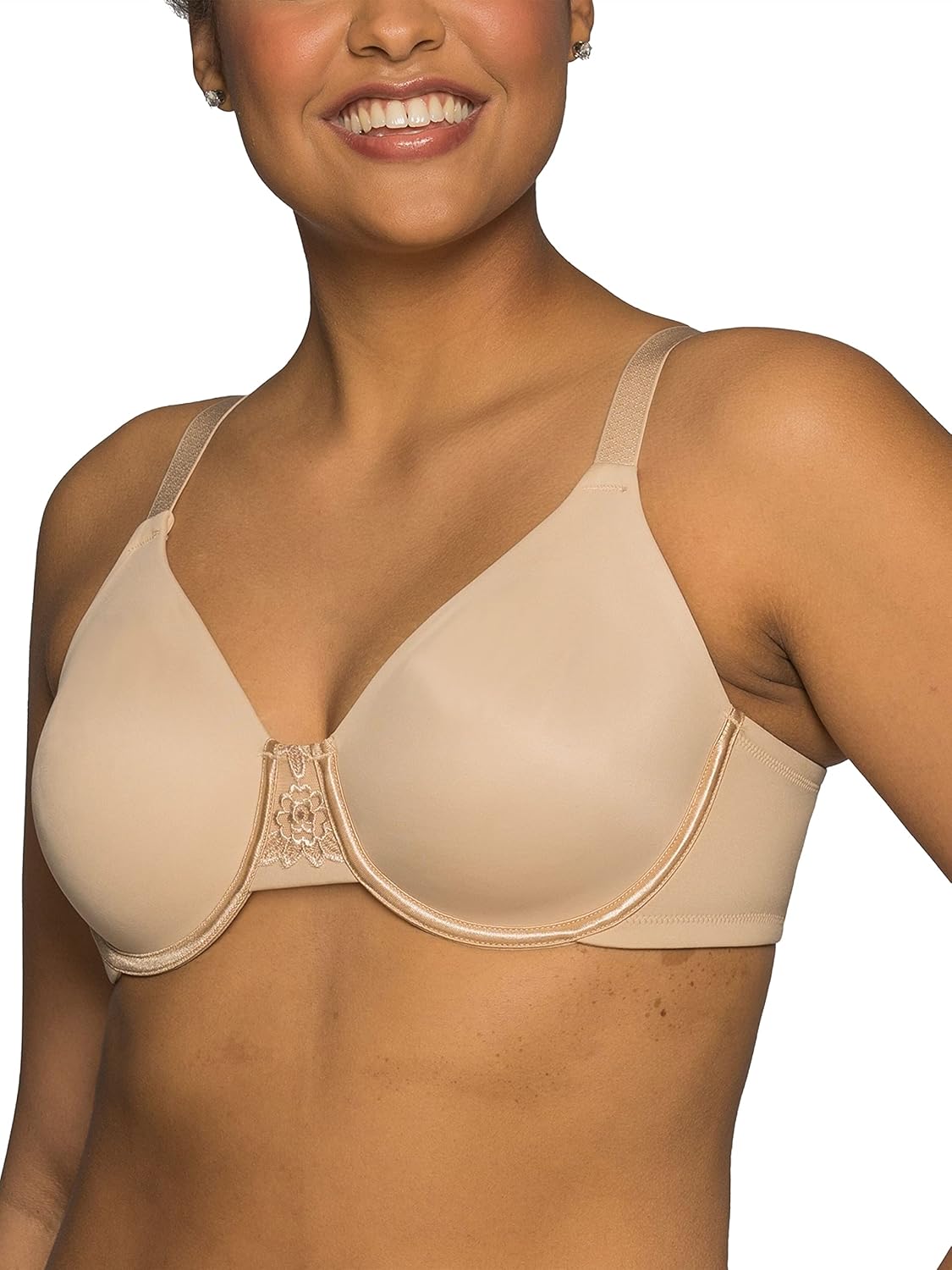
The minimizer bra is a useful test case. A minimizer is supposed to distribute tissue over a wider footprint, which means the side panel has to be wider and the band has to be stable. The Vanity Fair Beauty Back Smoothing Minimizer Bra above puts smoothing in its name. Smoothing only works if the back panel actually reaches the sides. In a true extended-size pattern, the closure has enough hook-and-eye columns to adjust, and the straps are set wide enough to stay on the shoulder. In a stretched pattern, the straps sit too close to the neck and the back band rides up before lunch.
Before you buy any wireless bra labeled plus-size, take two measurements: underbust and high hip. If the underbust measurement falls near the top of the band range, the pattern may not be drafted for you. A larger size number does not fix a narrow pattern. It creates excess fabric in the cup, not in the band where it is needed.
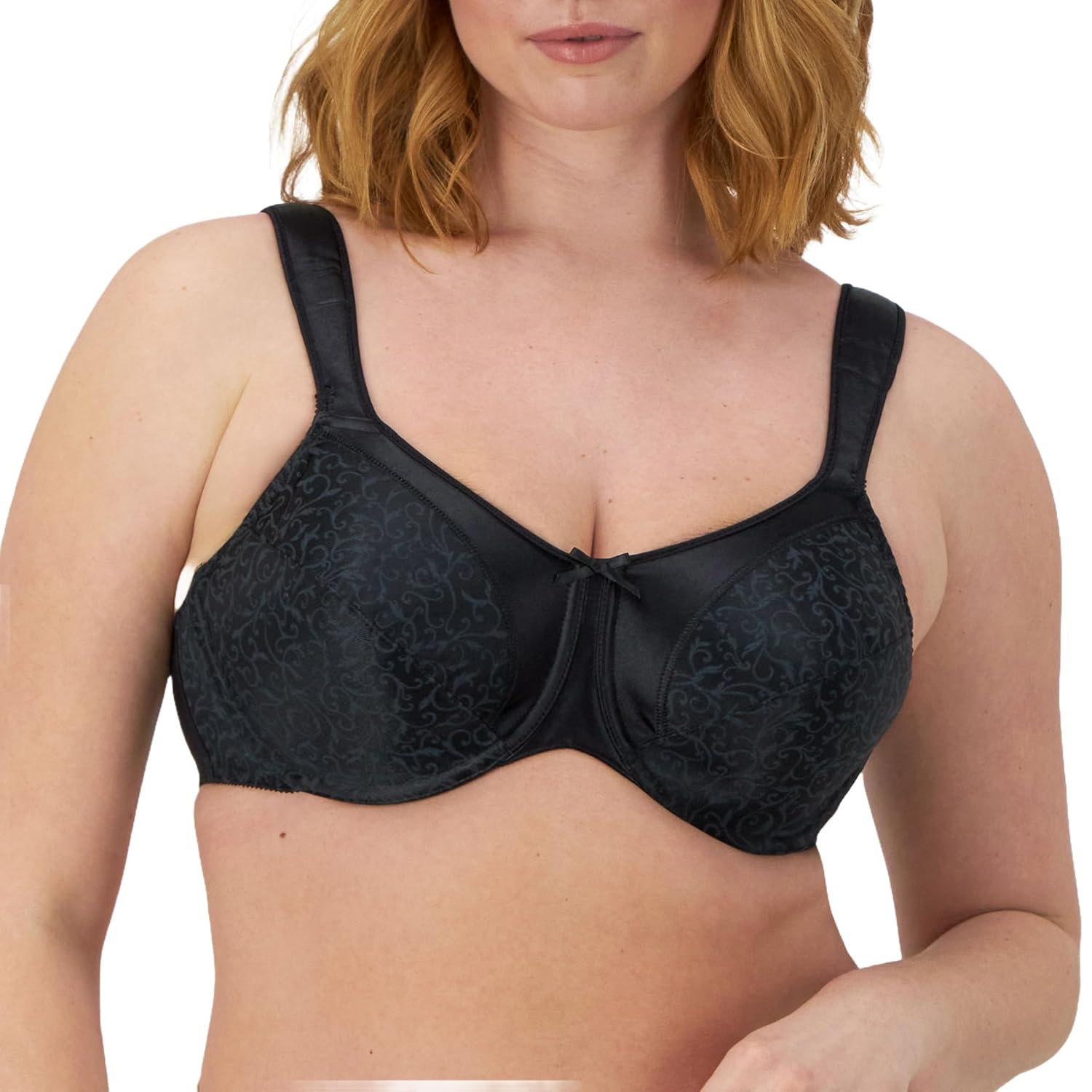
Compare the Bali Minimizer Bra with Satin Tracings below. The satin is decorative. The seams are structural. Where the seam sits across the cup and under the arm tells you more than any tag. If the seam cuts into the armpit, the pattern is too short in the side. A plus-size pattern would have moved the seam outward and raised the underarm line. The lace does not do that work; the pattern does.
Briefs: The Stretch Test Doesn't Lie
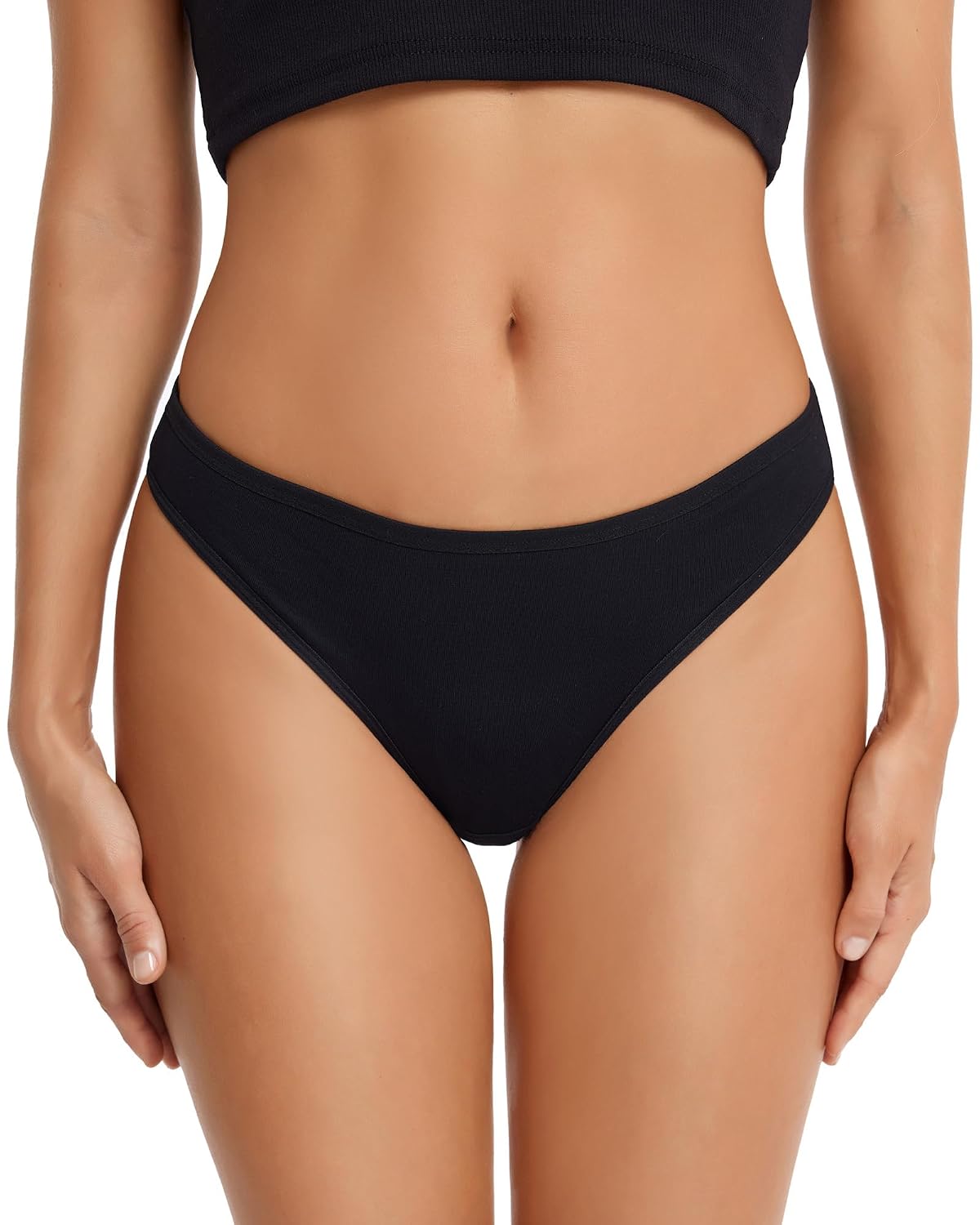
For briefs, the same logic applies, but the stakes are lower and the evidence is easier to see. Put the gusset where the gusset belongs. In a true plus pattern, the front rise is long enough to cross the lower belly without rolling, and the back rise is long enough to cover the rear without turning into a thong. In a stretched S, the elastic is doing the sizing. The waistband folds, the side seam wanders, and the leg opening cuts into the thigh because the pattern was never given a wider thigh curve.
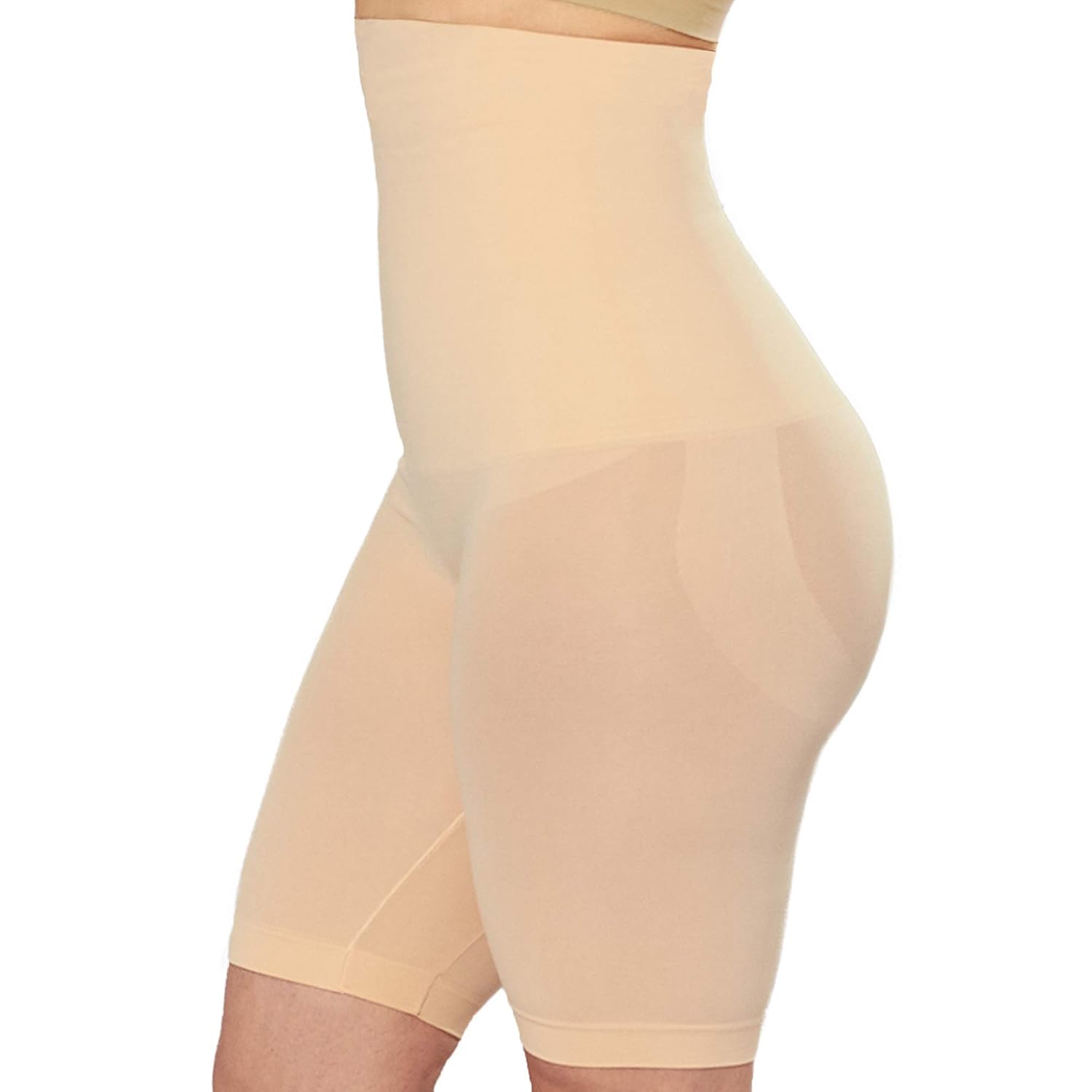
A true extended-size brief does not need maximum stretch to fit. It needs cut. A wide gusset, a longer rise and a side seam that curves around the hip rather than across it. The fabric can be soft without acting as the only source of give. We have said this about shapewear too: buy the inseam, not the slogan. The same applies to briefs and wireless bras. The construction is the promise. The size tag is a filing category.
Late summer is a useful time to do this audit. You are between seasons, and so is your lingerie drawer. When you reach for a wireless bra or a smooth brief, ask whether it fits because the pattern was made for you, or because the fabric is willing to be distorted. Stretch should accommodate, not apologize.