How to Pick a Thigh Slimmer: Inseam, Grip, and the Roll-Down Problem
A thigh slimmer is two decisions, not one: what happens at the waist, and what happens at the hem. Get both right and it disappears under a dress. Get either wrong and you spend the evening in a bathroom, rolling a leg back down.
The thigh slimmer aisle runs from nine-dollar no-name shorts to Leonisa money, and the price gap buys exactly three things: fabric recovery, a waistband that stays, and a hem that does not saw into the leg. Everything else is marketing.
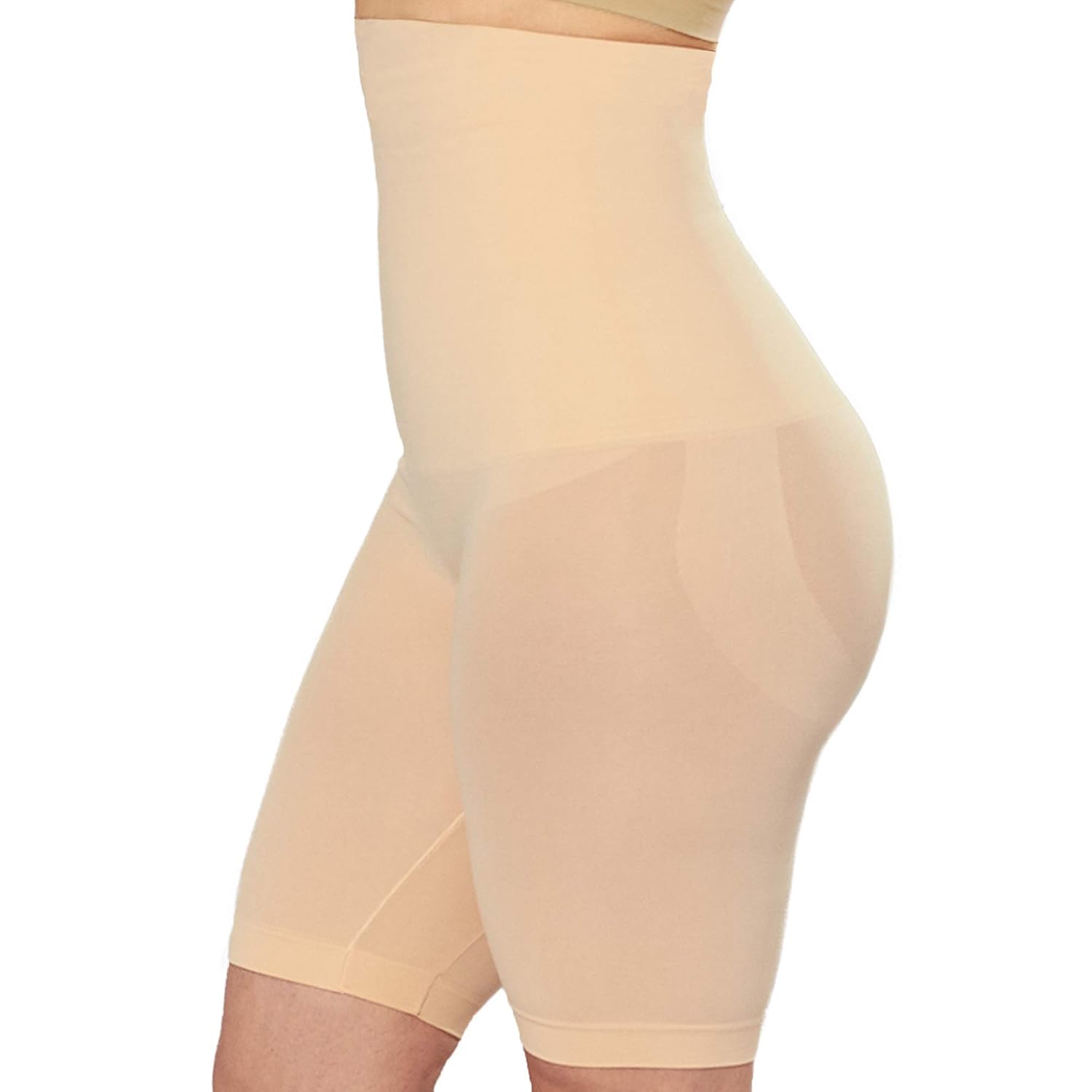
Mid-thigh, high waist, one seam you can plan around. The template the whole aisle copies.
The waist is the first failure point
Roll-down is not a sizing complaint, it is a length complaint. If the waistband ends below your natural waist, it will roll — the only question is when. Buy the version that reaches the bra line, or accept a band that sits where your torso bends. Silicone strips inside the band help on day one; fabric tension is what helps on day thirty.
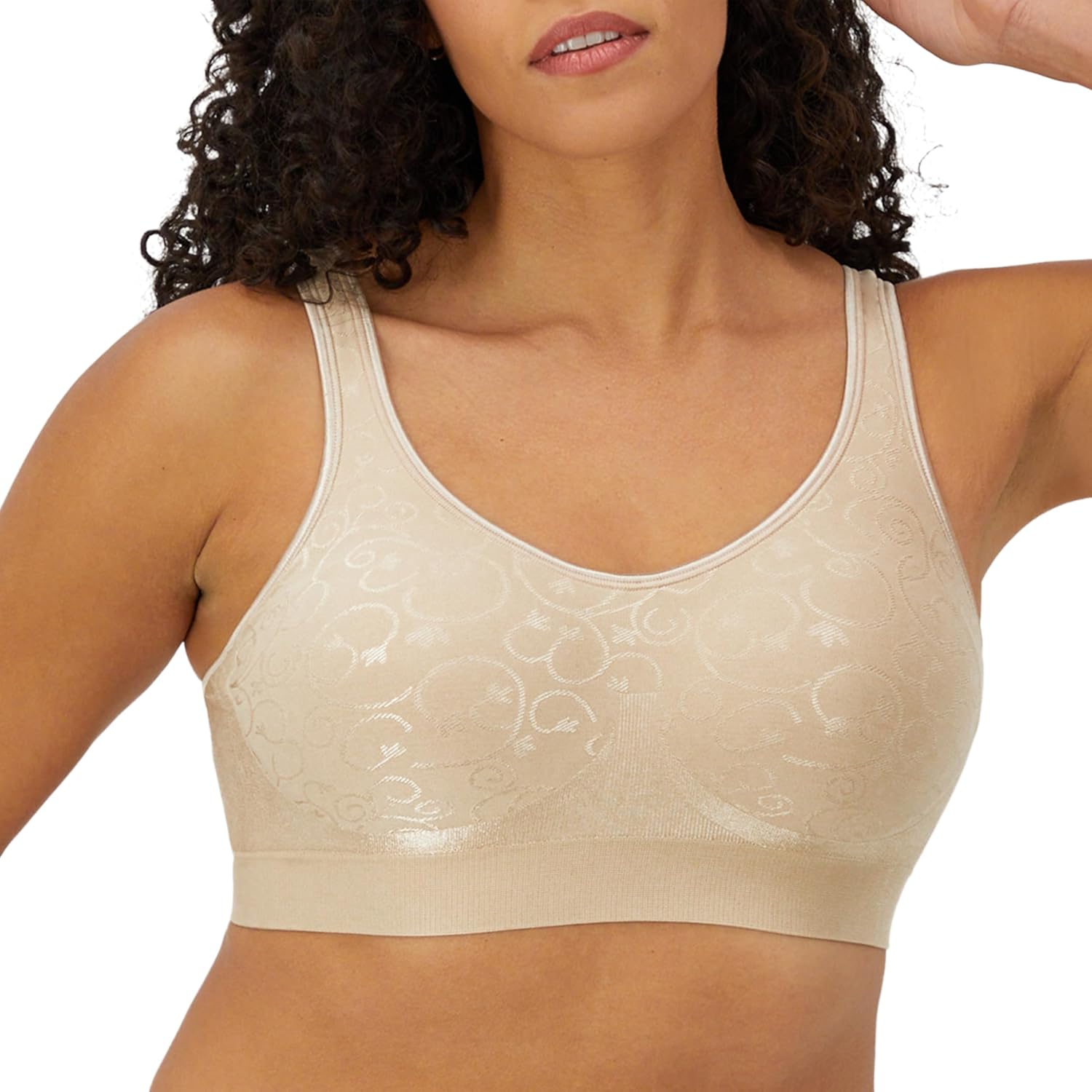
Our Maidenform Cool Comfort review and the Naomi & Nicole sister listing show both endings: same house, different waist, different evening.
The hem is the second
A hem that ends mid-thigh at the widest point will show under anything knit. Look for a laser-cut or bonded edge if the dress is thin, a sewn hem if the dress has structure. And if chafing is the real problem rather than smoothing, a slimmer is overkill — the no-panty-line guide and plain anti-chafe shorts solve that for less.
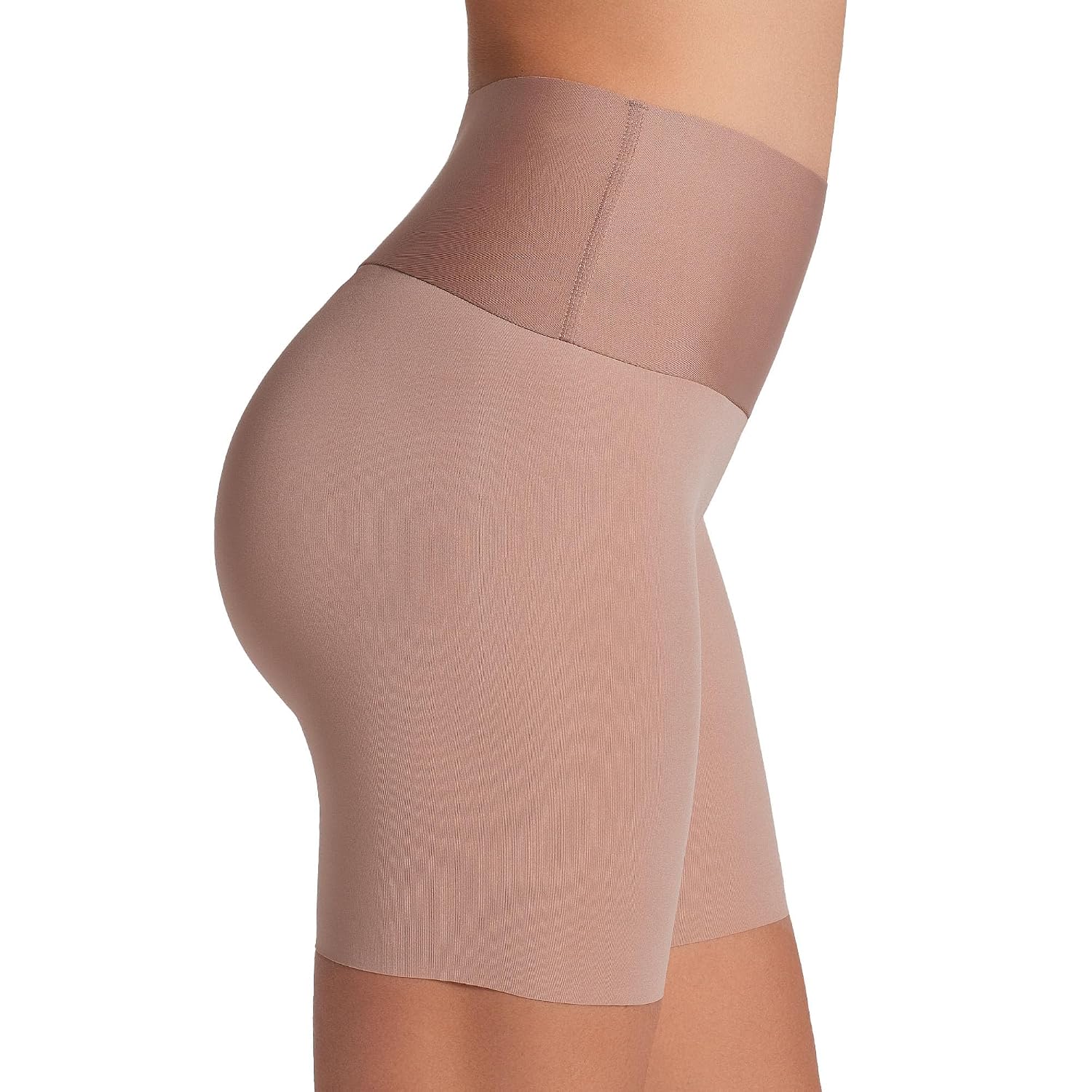
Leonisa money buys a bonded hem and fabric that recovers. Visible only in what does not happen.
Compression is the last thing to shop by
Firm is not better. Firm is for a photograph; moderate is for a dinner. If you size down for more hold, the waistband rolls and the hem bites — the two failures you were trying to avoid. Size the hip on the size guide, not the waist you want.
The SHAPERMINT shorts review is the twenty-five-dollar benchmark; the glossary entry on thigh slimmers is the two-minute version.