
Help! My Bra Straps Keep Falling Down. Here Are 4 Reasons Why (and How to Fix It)
It’s a subtle but constant battle that can ruin an otherwise perfect day: the relentless slide of a bra strap down your arm. You find yourself doing the “shoulder shrug” in the middle of a meeting, the “discreet reach” in the grocery line, or the full-on yank in the privacy of a hallway. It’s annoying, distracting, and a clear sign that your bra isn’t doing its job.
Here is the part nobody tells you: the straps are rarely the problem. They are the symptom. A bra that fits holds itself up from the band; the straps only trim the neckline and keep the cups where they belong. When they start sliding, one of four things is going on — and each one has a different fix. Tightening the straps, which is the reflex, is usually the worst thing you can do.
Reason 1: The band is doing less work than it should
Around 80–90% of a bra’s support comes from the band. That is why a band should sit level and firm around the ribcage while the straps stay almost decorative. When the band loosens — because the elastic has aged, because it was never the right size, or because it is hooked on the last hook set — the straps are suddenly asked to carry weight they were never designed to carry. They lose the battle and start their slow slide down your arm.
Test it in ten seconds. Fasten the bra on the loosest hook and pull the band away from your back. Two fingers, about 5 cm, is normal give. A whole fist means the band is too big: size down in the band and up in the cup — the same cup volume on a smaller frame, which is what “sister sizing” actually means. And if the band rides up at the back, that is not tightness, that is the cups lifting the whole bra, which brings us to reason three.
The fix. Measure once with a soft tape — our size guide walks through it — then buy your correct band size and always start on the loosest hook. That leaves you three sets of hooks to move through as the elastic relaxes over the first year. Wash in cold water by hand or in a mesh bag: hot water and a dryer are what turn a firm band into a decorative one.
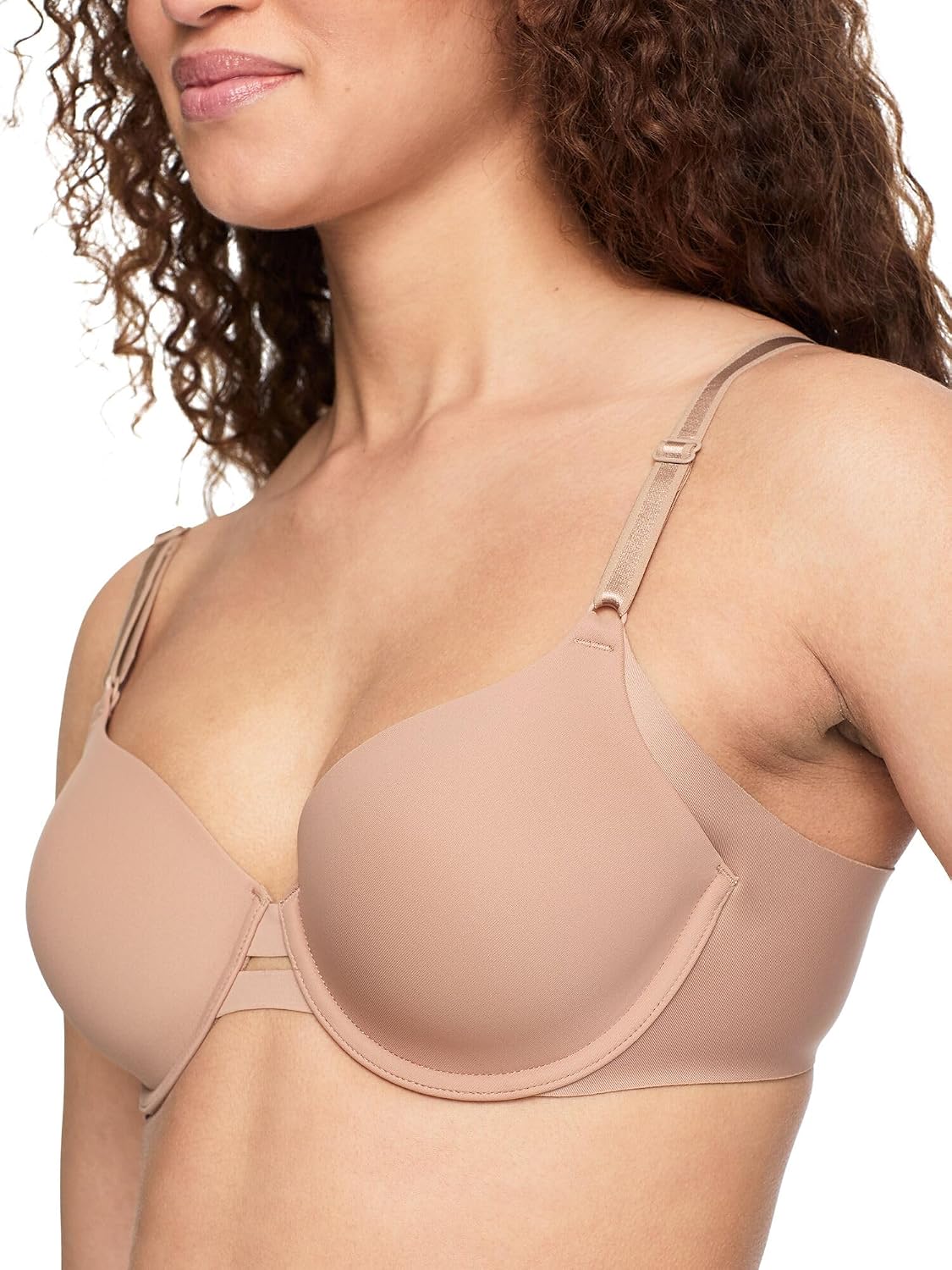
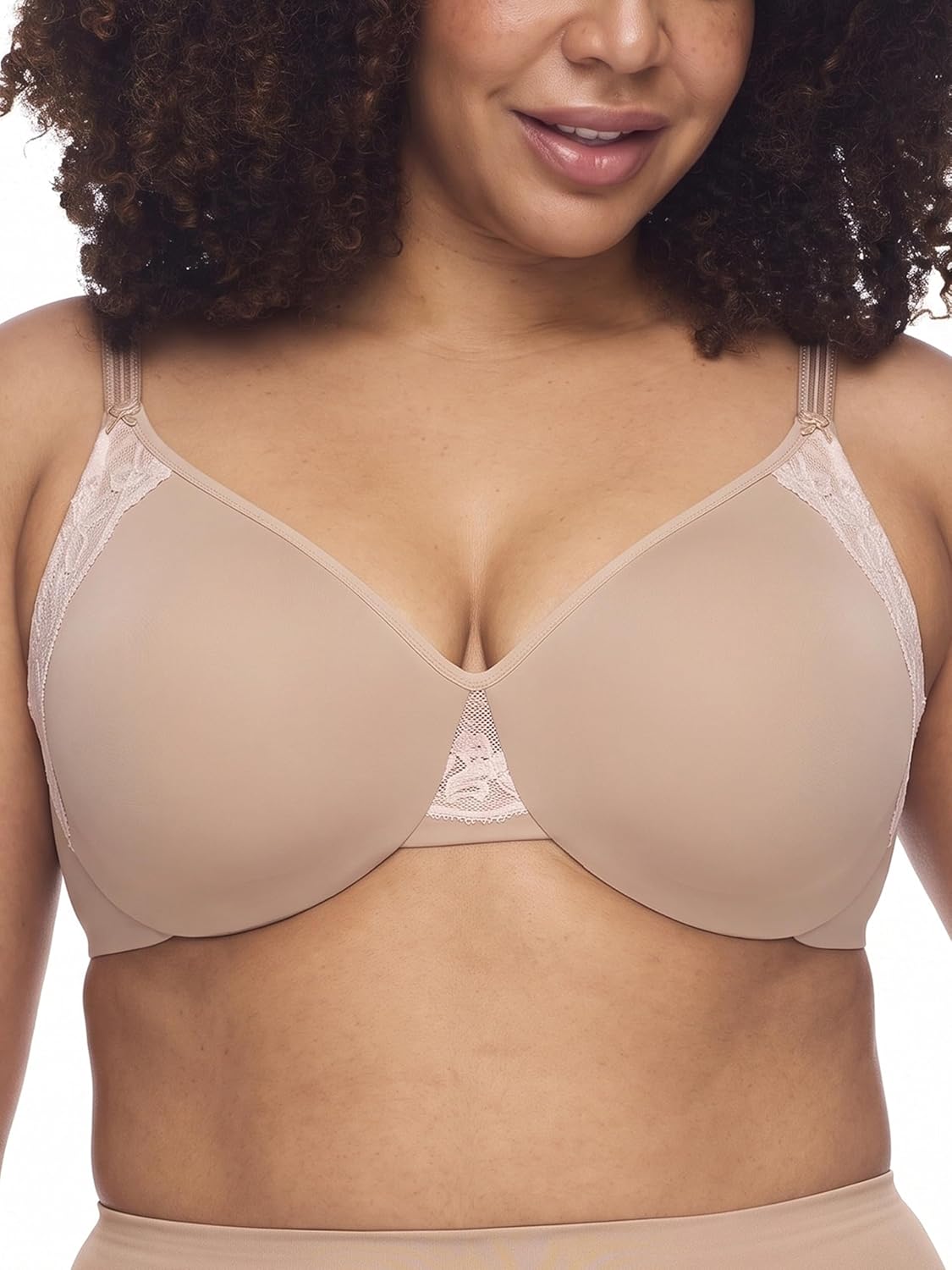
A band that is actually doing the work: Warner’s Blissful Benefits, $21.99.
Reason 2: The straps are tightened to compensate for the band
This is the most common mistake, and it is the reason the problem feels worse after you “fix” it. When the band is loose, the instinct is to shorten the straps. What that does is pull the back of the bra upward, lift the band off the ribcage, and hand even more weight to the straps. The shoulder then does the sharp-shrug move to escape the pressure, the strap slips off, and the cycle repeats every few minutes.
Straps are meant to be snug, not tight: you should be able to slide one finger under the strap without pressing hard, and there should be no indentation in the shoulder at the end of the day. Red marks are not “the sign of a good bra”; they are a sign the band is not doing its job.
The fix. Set the band first, then shorten each strap equally, two notches at a time, and check in a mirror with a shirt on — the shoulder seam is where a slipping strap is actually visible. And check them every few washes: straps creep looser with time, which is why “it was fine last month” is such a common phrase at the fit desk.
Reason 3: The cup size is wrong — in either direction
A cup that is too small does something quite specific: the breast pushes the cup forward and down, the front of the band lifts off the ribcage, and the whole bra starts rotating downward. The straps, which are attached to the back of the band, go slack and slide forward off the shoulder. It looks like a strap problem. It is a cup problem.
A cup that is too large misbehaves differently. The bra does not move much, but the straps sit further out on the shoulder — on the part of the trapezius that slopes — and they wander because nothing is holding them inward. Unsold, unworn, and “it fits but something is off” all live here.
Three checks that settle it. Scoop and swoop: bend forward, gather all the breast tissue into the cup, and stand up. Then look for these three things:
- The centre gore (the bit between the cups) lies flat against your sternum, not floating away from it. If it floats, the cup is too small.
- The underwire sits on your ribcage, in the crease under the breast — not on breast tissue, and not halfway down your stomach.
- No overflow at the top of the cup and no gaping at the outer edge when you lift your arms.
The fix. If the gore floats or you overflow, go up one cup and down one band (the sister size again) and re-check those three points. If the cups gape, go down a cup. And if your body has changed — pregnancy, nursing, a 10 lb shift in either direction — the cups changed too; a fit from two years ago is a fit from a different body. Some brands also run a full cup size small, which is worth knowing before you blame yourself: our Bali minimizer review covers exactly that trap.
Reason 4: Your shoulders and the bra’s geometry do not match
This is the reason that survives every sizing fix. If your shoulders slope steeply, are narrow, or sit at different heights, straps will find the downhill path no matter how well the band fits. Square, straight shoulders do the opposite: they give the strap a wide, smooth ledge and it slides sideways.
Bras are cut for an average shoulder. Yours is not average, and no amount of tightening will argue with anatomy.
What actually works, in order of how much it changes the geometry:
- A racerback or front-closure cut. The straps converge at the centre back, so they cannot slide outward — the tension pulls them inward instead. A seamless lace racerback like the Lusait Wireless Jelly Bra ($19.86) is the cheapest structural fix there is.
- A convertible or multiway bra, worn crossed at the back. Same idea, done with what you already own — and it works on most bras that have a hook or a clip on the strap.
- Non-slip strap clips. A pair costs less than a coffee and pulls your existing straps together at the back. The honest limits: they change the neckline at the back, so they are wrong for an open-back dress. The KALIONE Non-Slip clips ($5.49) grip best, the W-Plus clips ($5.99) are the ones to buy if your straps are wide, and the FIVEGOGO set ($4.79) is the cheap experiment.
- Strap material. Smooth satin slides on smooth skin; matte elastic and silicone-backed straps do not. If two bras fit identically and one slips, look at the strap.
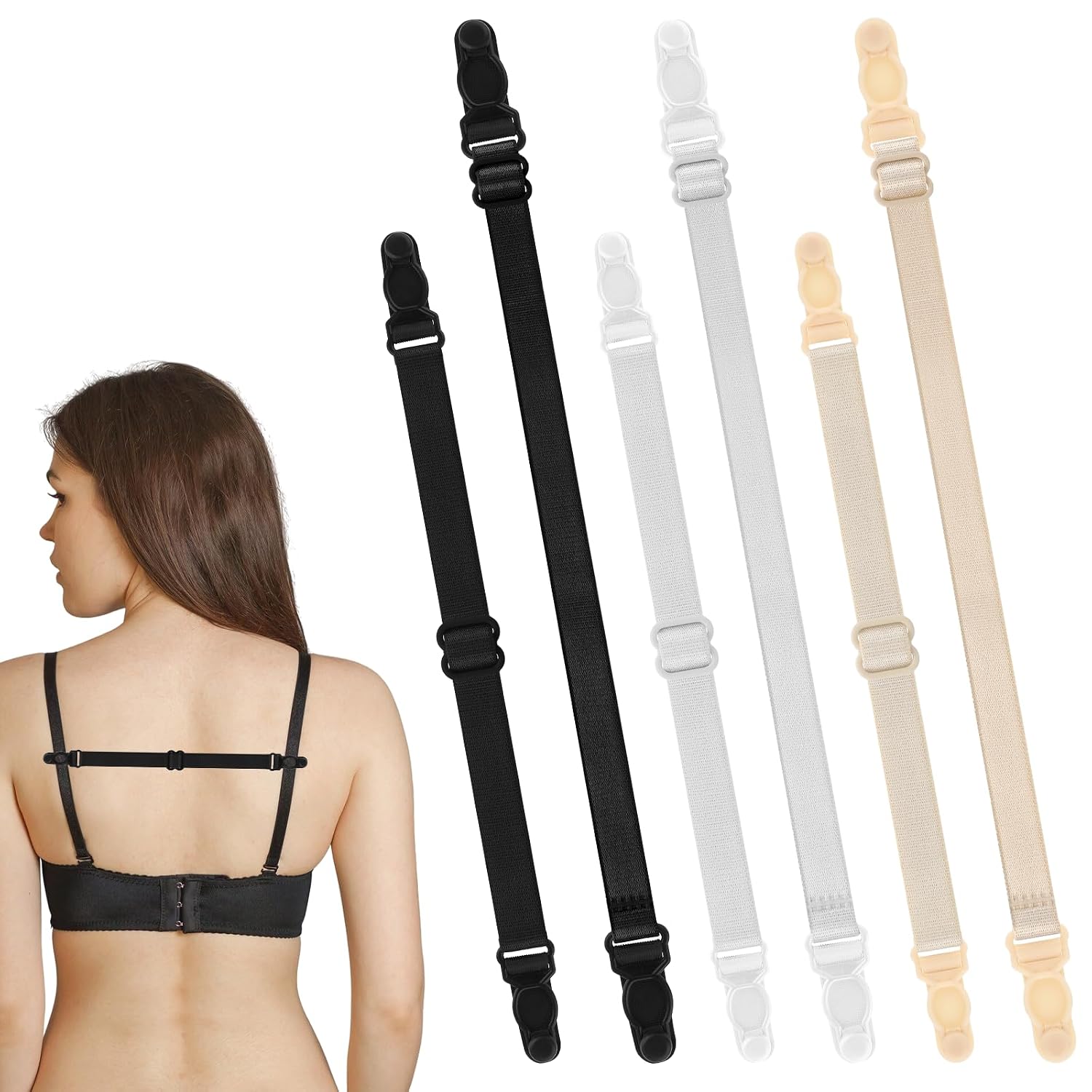
A pair of clips pulls your existing straps together at the back — $5.49, and it works on any bra.
The order to fix this in
Almost everyone starts at the end and works backwards. Do it the other way:
- Band — correct size, on the loosest hook, level at the back.
- Cups — gore flat, wire on the ribcage, no overflow and no gaping.
- Straps — snug, one finger of give, no shoulder marks.
- Geometry — only now reach for a racerback cut or a pair of strap clips.
Three of those four fixes cost nothing. The fourth costs five dollars.
When the bra is simply finished
Elastic does not last forever, and it does not announce itself. Hold the band between both hands, stretch it out, and let go: a healthy band snaps back to size. A tired one stays stretched, or comes back slowly. A bra that has lost its band is not a bra that can be tightened back into service — no hook setting, no strap adjustment and no clip will bring the elastic back. Most everyday bras need replacing after 6–12 months of regular wear; two in rotation means each one lasts longer than two worn one after the other.
If you are troubleshooting a bra that is two years old and has been through the dryer every week, stop at reason one and skip the rest.
First published October 2025; refreshed September 2026 with current prices and stock checked.